Art Historical Context
Johann Carl Rohmer style was influenced by artistic streams that developed between 1900 and 1920. The first two decades of the
20. Century was characterized by vibrant developments in the art scene. This period includes the Secession Style, which is a stream of the Jugendstil in Europe.
A community of artists (Secession) will band together to break from the conserative European standard-bearers of academic and official art
during the late 19th and early 20th century.
In response to the Munich and Vienna Secession, the Nuremberg artist Georg Achtelstetter lead a group of avant-gard artists in the city, that also included
Johann Carl Rohmer.
|
 |
|
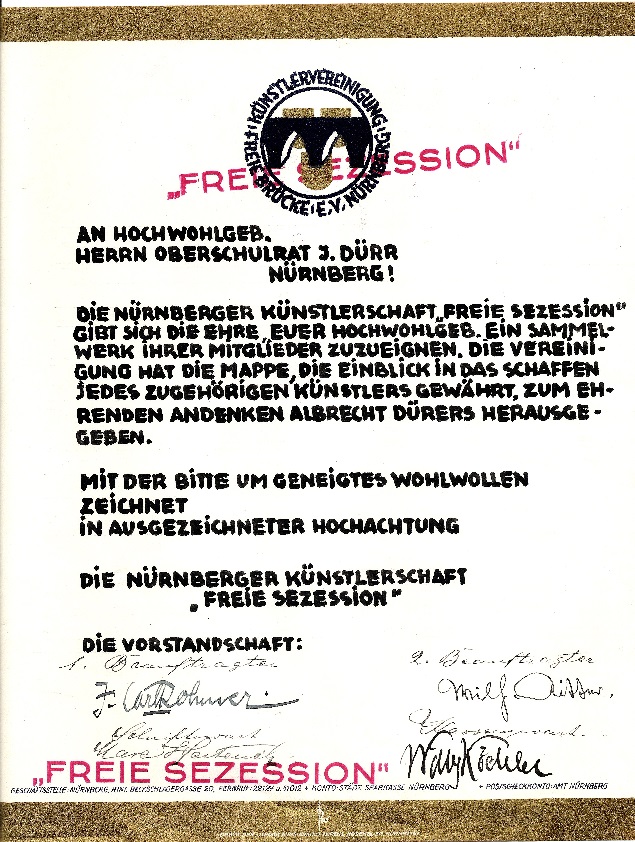
On the signature page of the yearly Edition by the Free Secession of Nuremberg Artists,
published with the theme of "Dürerjahr 1928," we find Johann Carl Rohmer's signature.
|
|
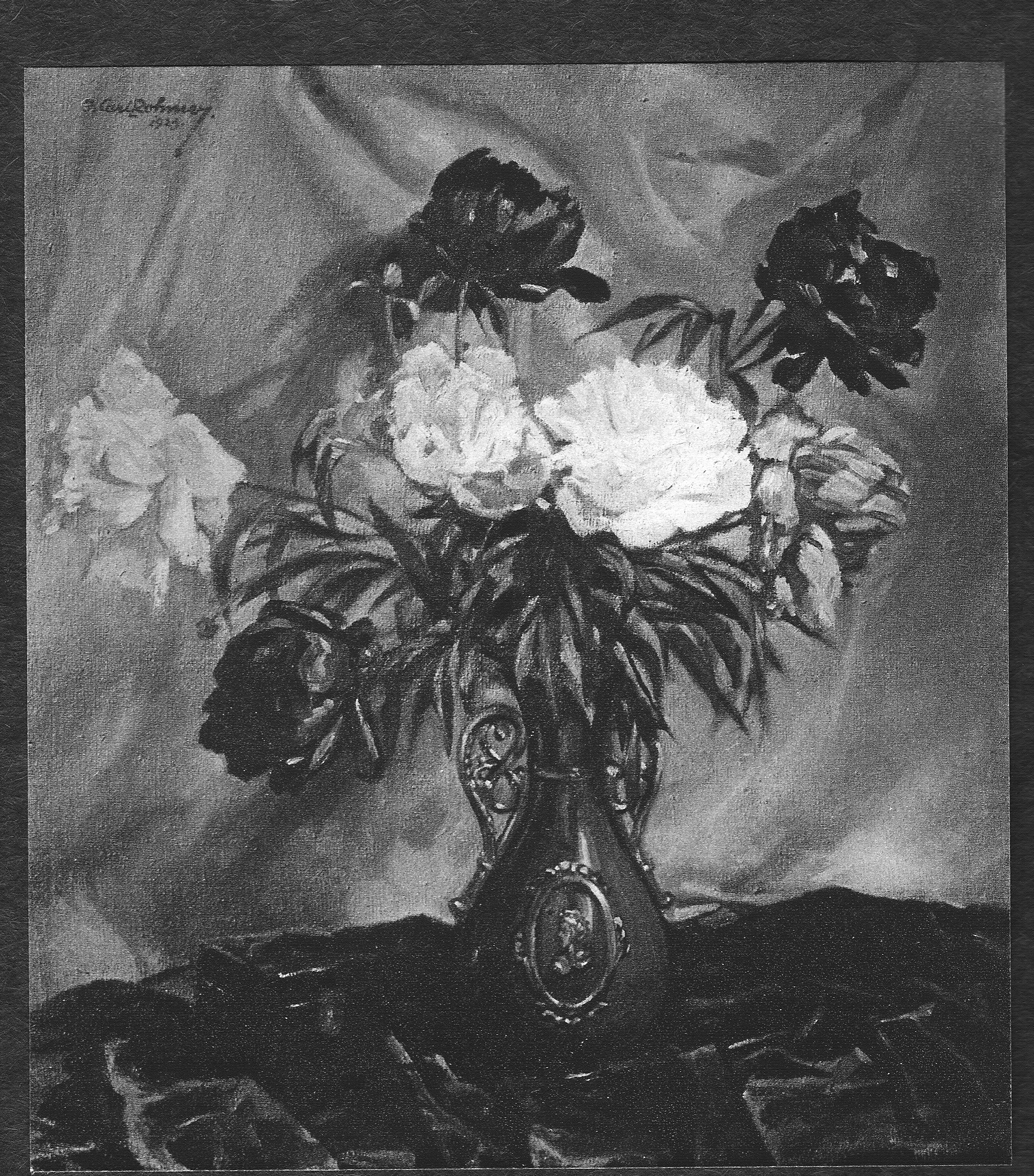
In the 1928 edition of the Free Secession of Nuremberg artists is a black and white print
of a Rohmer aquarell, showing a bouquet of peonias in a vase.
|
|
 |
 |
|
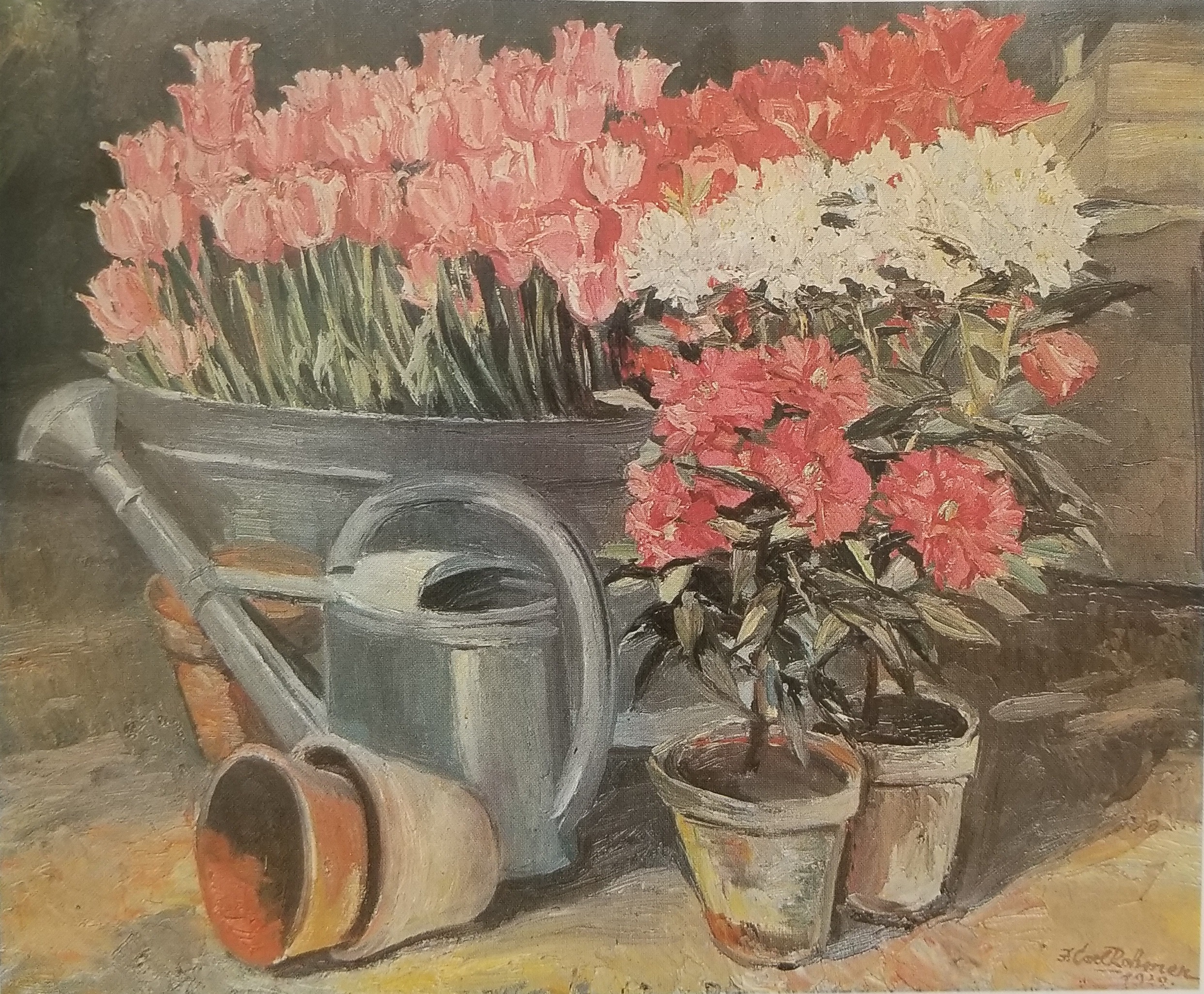
The 1989 edition of "Kunst in Nürnberg:
Gemälde, Druckgraphiken und Bilderhauerarbeiten aus dem Besitz der
Stadt Nürnberg" by Angela Lohrey features this still life "Stilleben mit
Gieskanne und Blumen," dated 1929. At the time, the painting was located in Nuremberg
in the Steueramt (Tax Authority), located in the Theresienstrasse 7, Room 110.
|
| |